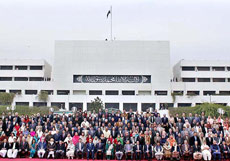
Political developments in Pakistan
You can select an year from the list below to see the political developments took place since Pakistan was found in 1947.
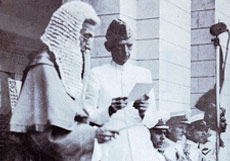
Pakistan comes into existence as a sovereign state on 14th August 1947. The Constituent Assembly, carved out of the existing Central Legislature, meets on 11th August and elects Muhammad Ali Jinnah as its President. The Government of India Act 1935 is to provide the legal foundations for the new state till the framing on a Constitution. Quaid-e-Azam is sworn in as the first Governor General.
Urdu is declared the national language of Pakistan on Feb 25, 1948. This measure would later have major consequences for the new nation physically divided into two parts.
1948
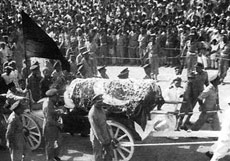
Founding father of nation Quaid-e-Azam passes away in Karachi on September 11, 1948, leaving a leadership vacuum which is hard to fill.
1948
Following the demise of the Quaid, Khwaja Nazimuddin becomes the Governor-General in November 1948 while Nawabzada Liaqat Ali Khan continus as the Prime Minister.
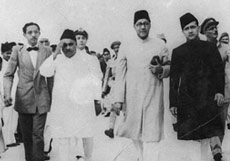
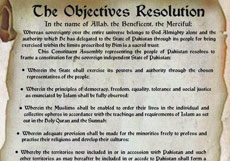
Constituent Assembly of Pakistan adopts the Objectives Resolution on March 12, 1949, as a guide to future constitution modeled on the ideology of Islam. A Basic Principles Committee is also set up to recommend the principles on which future Constitution of Pakistan is to be based.
The first interim report of the Basic Principles Committee presented in September envisages Pakistan as a federation with bicameral legislature at centre, the upper house consisting of equal representatives of all constituent units and the lower house based on population.
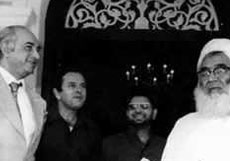
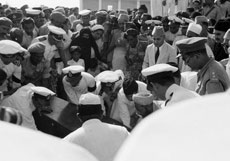
Prime Minister Liaquat Ali Khan is assassinated at Rawalpindi on October 16, 1951, while addressing a public meeting. He is succeeded by Khawaja Namimuddin, while Malik Ghulam Muhammad becomes the Governor General.
The report of the Basic Principles Committee, presented in Dec 1952 introduces the principle of parity between the two wings of Pakistan. The House of Units in the bicameral legislature was to have 60 members each from East & West Pakistan. The House of People would also have 200 members each from the two wings. The proposals, however, could not be finalized.
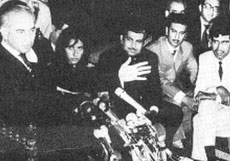
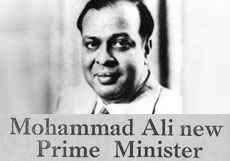
Governor General Ghulam Muhammad dismisses the Government of Khwaja Nazimuddin and appoints Muhammad Ali Bogra as Prime Minister on April 17,1953.
The Constituent Assembly amends the Government of India Act 1935 curtailing the powers of Governor General in appointment of PM & ministers. In October, the Assembly is dissolved by Governor General Ghulam Muhammad. The Prime Minister and his Cabinet is, however, not dismissed. Maulvi Tamizuddin, President of the Assembly, challenges the dissolution in the Sindh Chief Court, and wins the case. On appeal, however, the Federal Court led by Chief Justice Muhammad Munir, decides the case in favour of the Government. Justice Cornelius dissents with the majority judgment.During this period the controversy relating to national language continues and on September 21, 1954, the Constituent Assembly unanimously passes a resolution in favour of Urdu and Bengali as national languages.
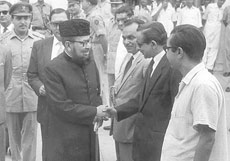
The second Constituent Assembly, consisting of 80 members (40 each from East & West Pakistan) elected by the respective Provincial Assemblies, cames into existence on 28th May 1955. The Assembly elects Choudhary Muhammad Ali as the Parliamentary leader of Muslim League and consequently the Prime Minister. In a major decision, the Assembly creates West Pakistan (One Unit), with the aim to create parity between the two wings (East and West). Later that year Governor-General Ghulam Mohammad resigns and is succeeded by Iskander Mirza.
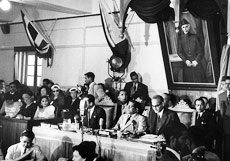
The Constituent Assembly formulates the new Constitution which is promulgated on 23rd March. Major-General Iskander Mirza becomes the first President under the Constitution. Ch Muhammad Ali quits the office of Prime Minister and is replaced by Huseyn Shaheed Suharwardy.
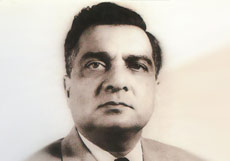
President Mirza forces Prime Minister Suhrawardy to resign in October. I.I. Chundrigar serves for a short interim period while Malik Feroz Khan Noon is soon elected as seventh Prime Minister.
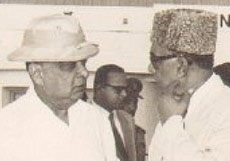
Introduction of President’s rule in East Pakistan in June, is followed in October by imposition of Martial Law throughout the country. General Ayub Khan calls the shots being the Chief Martial Law Administrator. Iskandar Mirza is exiled.
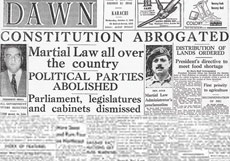
Martial law authorities enforce PRODA to disqualify politicians. Press freedom is curtailed and many newspapers are taken in Government control.
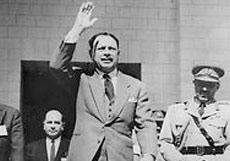
An eight member Constitution Commission headed by former Chief Justice of Supreme Court, Mr. Shahbuddin is appointed by the President to make recommendations for the Constitution.
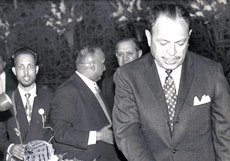
The Constitution Commission presents its report to the President in May 1961, who referres it to a five member Cabinet sub-committee, which finalizes the draft for a new Constitution.
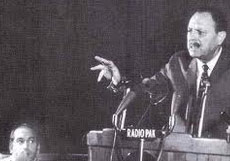
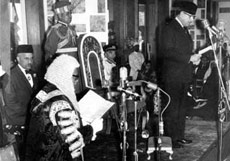
New Constitution is promulgated in March. National Assembly is elected and Ayub Khan takes oath as first President of Pakistan under the new constitution.
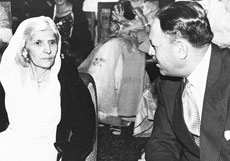
Presidential election is held in January. Field Marshal Ayub Khan is re-elected by an electoral college of 80,000 Basic Democrats. Miss Fatima Jinnah loses the election in a contest heavily tilted against her from the very start. In the National Assembly elections which follow, Pakistan Muslim League wins 120 out of 150 seats.
Sheikh Mujeeb, chief of Awami League, announces his six points in Karachi.
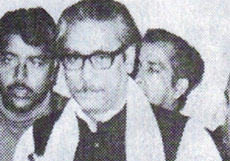
Pakistan Peoples Party is founded in Lahore with Zulfiqar Ali Bhutto as its Chairman.
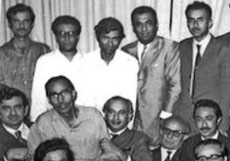
Political agitation against Ayub Khan’s rule gains momentum.
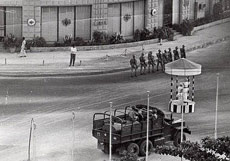
Following widespread agitation, Ayub Khan resigns and hands over power to Army Chief General Yahya Khan. Martial law is proclaimed once again and assemblies dissolved.
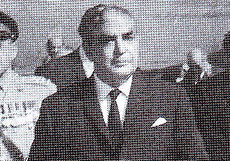
The Legal Framework Order issued in March lays the ground rules for elections and the subsequent Constitution making process.General elections are held in the country for the first time in December 1970. Awami League and Pakistan People Party emerge as leading parties in East and West Pakistan respectively.
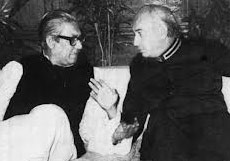
India launches full-scale attack on East Pakistan. Pakistan Army eventually surrenders on December 16. Bangladesh comes into being. General Yahya Khan hands over power to Z. A. Bhutto, who takes over as President and Chief Martial Law Administrator.
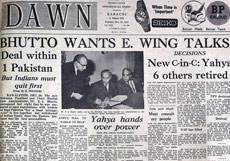
Bhutto is elected President. Martial Law is lifted and constitutional rule restored in the country. An Interim Constitution is approved by the National Assembly and enforced in April 1972. A 25 member House Committee is also set up to draft the permanent Constitution.
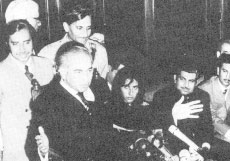
Constitution of Pakistan is enacted by the National Assembly on April 10, 1973. Political parties of all hues come together to produce this consensus document. Prior to this the Balochistan Government of Attaullah Mengal is removed by Bhutto. Baloch leaders Mengal, Bizenjo, Marri as well as Wali Khan are all imprisoned.
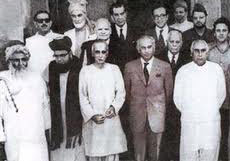
The first amendment relating to boundaries of Pakistan (post dismemberment) and the second declaring the status of Qadianis and Ahmadis as minority, made in the Constitution.
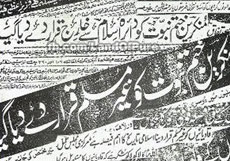
3rd amendment, empowering the Parliament to lift emergency and 4th restricting the powers of High Courts to grant bail to any person detained under preventive detention, passed.
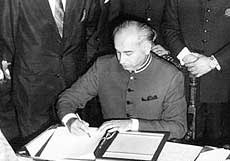
5th amendment passed, taking away the powers of High Court to enforce the grant of fundamental rights conferred by Chapter (1) Part II of Constitution. The 6thamendment lays down the retirement age of Chief Justice of Supreme Court and High Court as 65 & 62 years respectively.
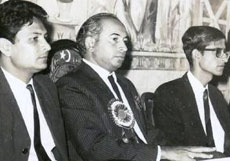
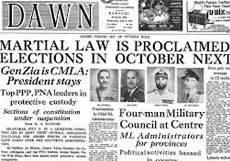
General elections are held in March. Out of a total of 200, PPP wins 155 seats as against 35 of Pakistan National Alliance (PNA) consisting of nine parties. PNA starts agitation alleging rigging of elections by Bhutto. General Zia-ul-Haq enforces Martial Law. Constitution is suspended and political activities banned.
Lahore High Court awards death sentence to Bhutto along with four others in Mohammad Ahmed Khan murder case. Later the same year General Zia-ul-Haq is sworn in as President.
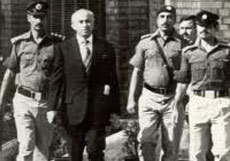
The Supreme Court upholds Z.A. Bhutto's conviction in Mohammad Ahmad Khan murder case. He is hanged in Rawalpindi jail on April 4
.
Provisional Constitution Order 1981 issued which restores selective articles of the Constitution of 1973. The PCO also defines the terms ‘Muslim’ and ‘Non-Muslim’.
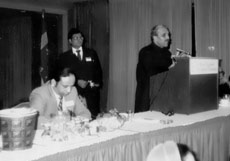
General Zia-ul-Haq inaugurates his creation, the Federal Council (Majlis-e-Shoora), to perform an advisory role for the President.
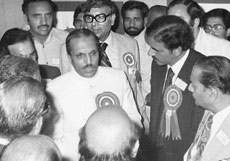
General Zia-ul-Haq declares himself successful in a Presidential referendum, which sought five more years for him. Altaf Hussain forms the Muhajir Qaumi Movement (MQM).
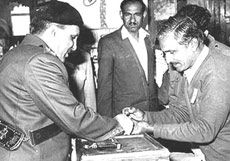
General Zia organises Party-less national elections in February 1985. MRD parties boycot the polls. Muhammad Khan Junejo of Muslim League is sworn in as Prime Minister and General Zia as President. The National Assembly adopts Eighth Amendment Bill giving powers to the President to dissolve the National Assembly. Martial Law is lifted and amended 1973 Constitution revived.
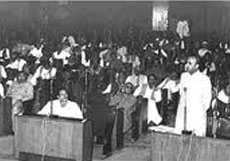
9th amendment introduced, which provides that the injunctions of Islam, as laid down in Quran & Sunnah shall be the supreme law and source of guidance for legislation. Benazir Bhutto returns to Pakistan and is enthusiastically received by her supporters.
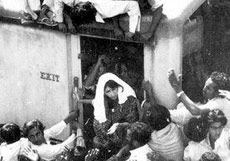
Benazir Bhutto gets married to Asif Ali Zardari. Qazi Hussain Ahmed becomes the Ameer of Jamat-i-Islami and Local bodies election held throughout the country.
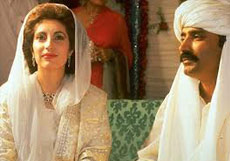
An eventful year, which witnesses Ojheri ammunition depot accident; dissolution of National Assembly/ dismissal of Junejo Government; promulgation of Shariat Ordinance; death of General Zia-ul-Haw in an air crash alongwith many other senior officers of Pakistan Army; formation of Islami Jamhoori Ittehad (IJI) by eight right wing political parties; general elections and the eventual rise of Benazir Bhutto to the position of Prime Minister in December.
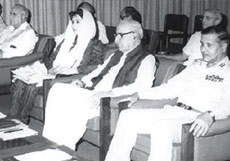
Benazir narrowly survives a no-confidence motion in the National Assembly in October 1989. No new legislation is passed, and fewer than a dozen bills, all minor amendments to existing legislation, are passed by the National Assembly.
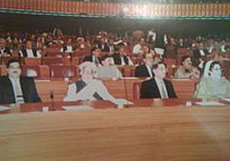
President Ghulam Ishaq Khan dissolves National Assembly in August dismissing Benazir Government, which was accused of ‘corruption, incompetence, and inaction; the release of convicted criminals under the guise of freeing political prisoners; a failure to maintain law and order in Sindh; and the use of official govsernment machinery to promote partisan interests’. In the resulting elections the right wing coalition, Islami Jamhoori Ittehad win the largest number of seats, paving way for Nawaz Sharif to become the Prime Minister.
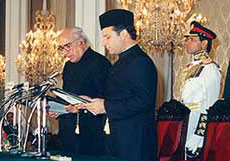
12th amendment for establishment of special courts for trial of heinous offences is adopted.
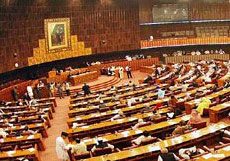
Army given powers for six months, under Article 147 of the Constitution, to restore law and order in Sindh. Operation against anti-state and anti-social elements starts in Sindh.
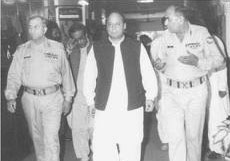
President Ghulam Ishaq Khan dissolves the National Assembly in April dismissing Nawaz Sharif government accusing him of corruption and of 'unleashing a reign of terror' against his political foes. Supreme Court restores the Assembly and Prime Minister Nawaz Sharif in May. Strained relations between the President and PM lead to a deadlock which is resolved only once both resign their offices in July.The resulting elections bring Benazir Bhutto back into the driving seat. Farooq Laghari is elected President.
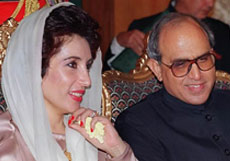
NWFP Provincial Assembly is suspended and Pir Sabir Shah’s Government removed by the President imposing Federal rule. Enforcement of Islamic Shariat in Malakand and Kohistan announced by Sherpao Government of NWFP.
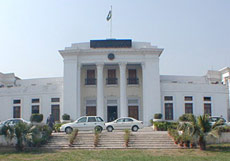
36 army officers, including Major General Zaheerul Islam Abbasi and Brigadier Mustansir Billa and 20 civilians are arrested by the Army on charges of planning a coup.
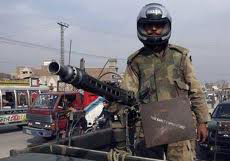
Benazir Bhutto’s brother Mir Murtaza Bhutto is assassinated in Karachi. Uneasy relationship between the Prime Minister and the President lead to the dissolution of the National Assembly and sacking of Premier Benazir Bhutto. Malik Mairaj Khalid is appointed care-taker prime minister. Imran Khan launches his political party, Tehreek-i-Insaf.\
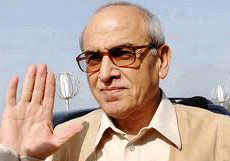
Supreme Court upholds President's action of dissolving the National Assembly and dismissing Benazir Government. Elections are held in February. PML secures 135 seats, clearing the way for Nawaz Sharif to become Prime Minister for a second time. Parliament passes the 13th amendment taking away the power of the President to dissolve the National Assembly and dismiss the Government. The Anti Floor Crossing 14th amendment is also passed the same year.
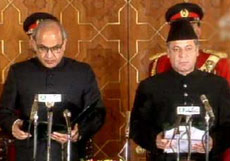
Following Farooq Leghari’s resignation, Rafiq Tarrar,a retired Judge of Supreme Court, is elected as President.
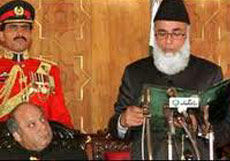
Nawaz Sharif and A. B. Vajpayee signe the 'Lahore Declaration' in February 1999, during the latter's visit to Pakistan. The Kargil episode, however revives the acrimony between the two countries. Khaki-Mufti relations are also strained leading eventually to Nawaz Sharif's ouster from power in October after a failed attempt to sack General Musharraf.
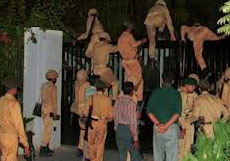
Nawaz Sharif iss sentenced to life imprisonment on charges of hijacking and terrorism. He is however sent into exile in Saudi Arabia in December. The Supreme Court validates the October 1999 coup and grants General Pervez Musharraf executive and legislative authority for three years.
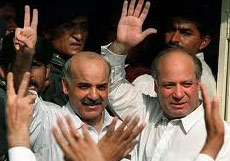
In addition to being the Chief Executive, and the Chief of Army Staff, General Pervez Musharraf assumes the office of President in June 2001. A new Local Government system is installed in August, after holding of elections in three phases.
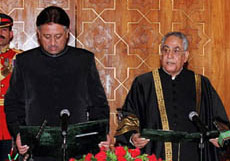
Prior to the expiry of the three years time given to him by the Supreme Court, Musharraf holds a Referendum in April 2002 for continuing in power and is declared successful. In August he issues a Legal Framework Order and holds general elections in November. Musharraf's ally, the PML-Q forms the Government with Mir Zafarullah Khan Jamali as Prime Minister.
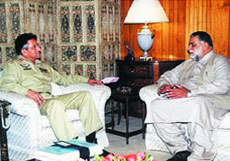
Elections to Senate are held in Feburary 2003. Ruling party wins most seats and consolidates its power. 17th Amendment is passed by Parliament legitimizing the actions taken by Pervez Musharraf since taking over in 1999.
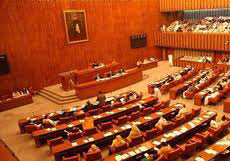
Prime Minister Zafarullah Khan Jamali steps down in June 2004 and nominates Ch. Shujaat Hussain as his interim successor. Shaukat Aziz eventually becomes Prime Minister in August. Real power however remains with the President.
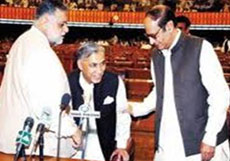
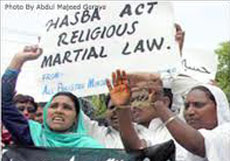
The NWFP assembly passes the first Hasba Bill (Sharia Implementation Bill) in July, despite fierce opposition. On a Presidential reference, Supreme Court declares several sections of the bill unconstitutional.
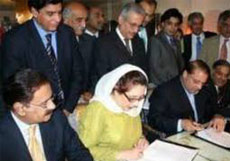
Two former Prime Ministers of Pakistan, Nawaz Sharif and Benazir Bhutto, hold negotiations in London culminating in the signing of Charter of democracy (CoD) in May 2006. The Charter outlines broad objectives relating to constitutional amendments, code of conduct for political parties, free & fair elections and civil military relations.
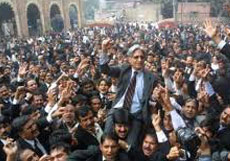
President Musharraf suspendes Chief Justice of Pakistan, Iftikhar Muhammad Chaudhry in March 2007. Countrywide protests by lawyers ensue. CJ is restored by a 13 member bench of Supreme Court in July. He and a number of other judges are, however, ousted by Musharraf, who imposes emergency in November. Benazir Bhutto and Nawaz Sharif return from exile. Benazir is immediately targeted by terrorists. She survives a blast at his rally in Karachi but the second attack in Rawalpindi proves fatal. Following the shocking assassination, elections are temporarily postponed as the nation mourns the loss.
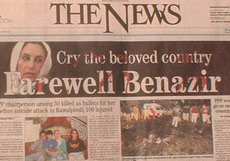
Election for National Assembly are held on February 18 2008. Peoples Party returns as the single largest party, followed by PML-N. Yusuf Raza Gilani is elected as the new Prime Minister heading a coalition Government. Pervez Musharraf steps down as President in August, after a few uneasy months with the Gilani Government. Asif Ali Zardari wins the election for President in September.
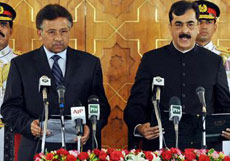
Eighteenth Constitutional Amendment is passed bringing about major changes in the Constitution, curtailing the powers of the President including his power to dissolve the National Assembly. The amendment also devolves powers from Center to the Provinces.
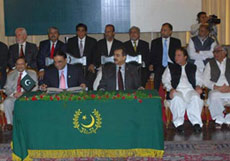
Prime Minister Gilani is disqualified by the Supreme Court on charges of contempt of Court. Raja Pervez Ashraf is elected Prime Minister by the National Assembly.
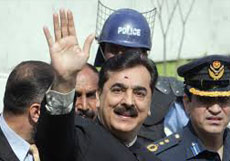
National Assembly completes its tenure on 16th March, 2013. Caretaker Government headed by Mir Hazar Khan Khoso is installed by the Election Commission after failure of the Government and the opposition to agree on a single individual to head the caretaker administration. General Elections are scheduled for 11 May 2013.